A wood-look wall is one of the warmest ways to finish a room, and it suits the hills well. A panelled bedroom wall in Tehri, a living room feature wall in Dehradun or a cafe wall in Rishikesh all gain a calm, natural feel from it. The trouble starts when you try to choose the material. Bamboo board, pine wood and WPC board can all give a wooden look, but they behave very differently on a wall, especially in damp, cold weather.
This guide compares the three using the actual sizes we stock, and explains what each one needs from you, so the wall still looks good after a few monsoons.
The Three Materials, in Plain Words
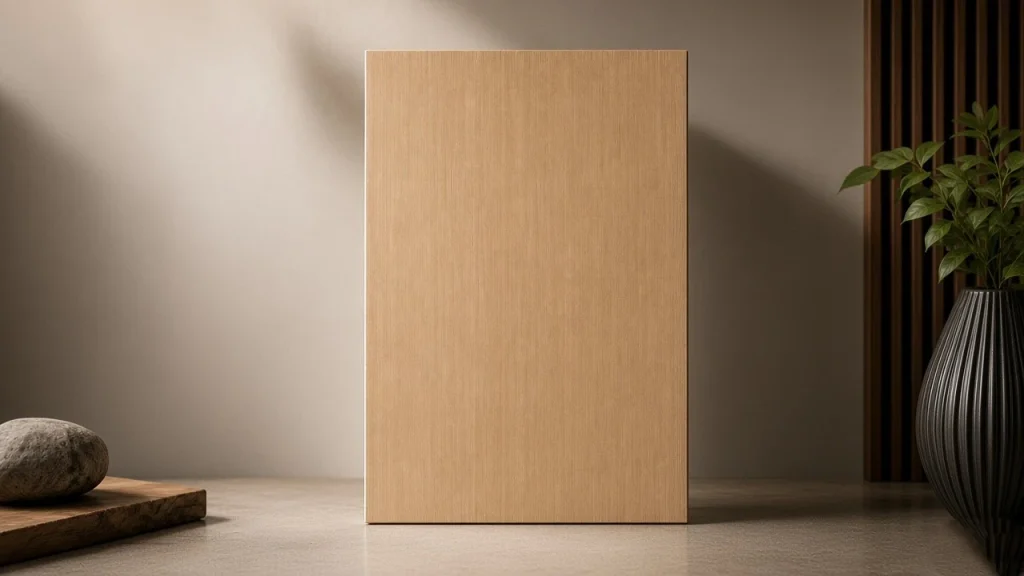
Bamboo board. Our bamboo boards come in large sheets of 3000 x 1220 mm and 8 mm thickness, in two colours, an oak wood shade and a creme shade. One sheet weighs about 18 kg and covers roughly 39 square feet, so a single sheet can cover a good part of a wall. The surface has a soft, natural bamboo look.
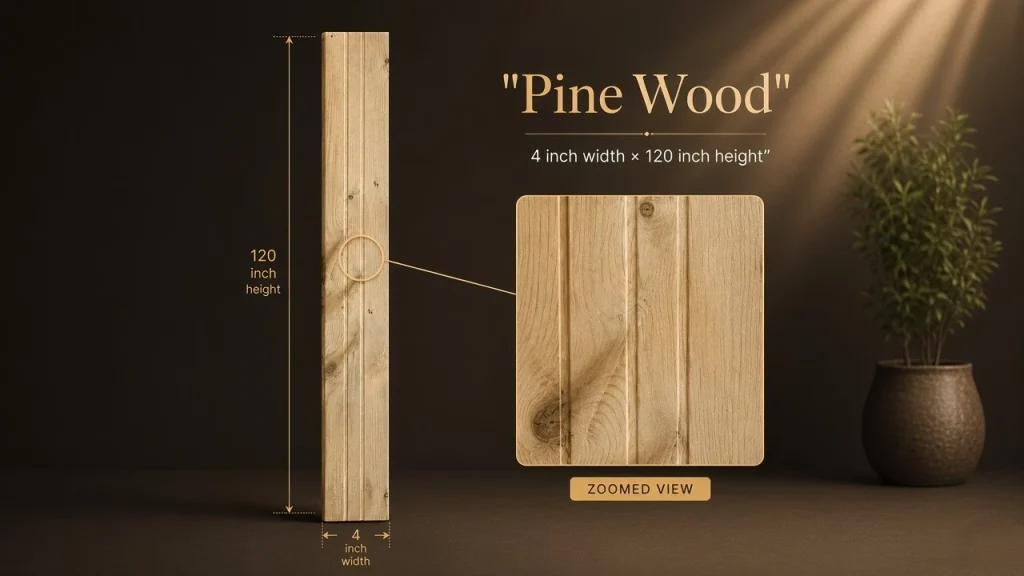
Pine wood. Our pine wood comes as slim strips, 101 mm wide, 3048 mm long and 8 mm thick, weighing about 1.7 kg each. Each strip covers a little over 3 square feet. Pine is a natural softwood, with a visible grain and a warm colour, and it is usually fixed in rows to build up a panelled wall.
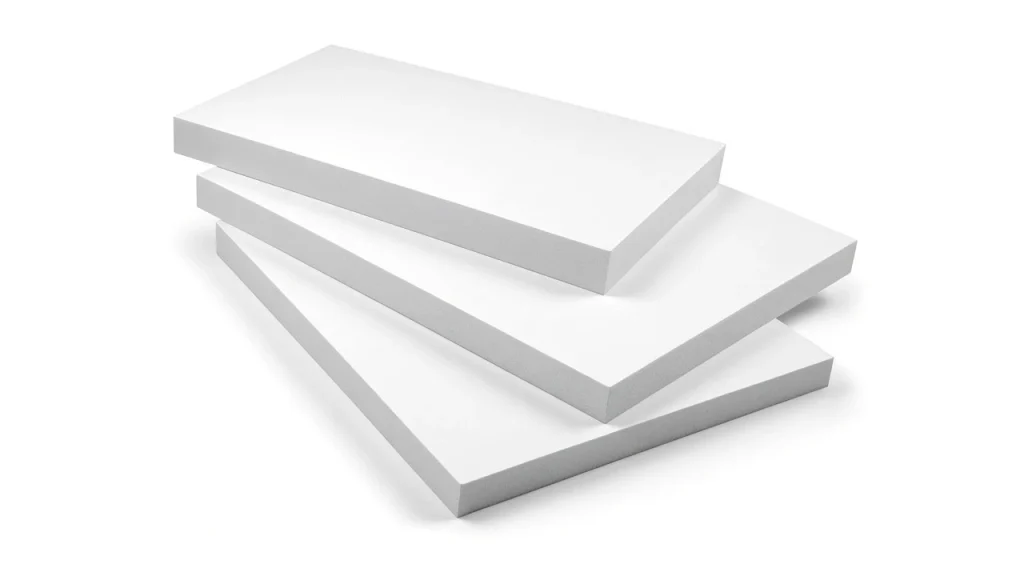
WPC board. WPC stands for wood plastic composite. Our WPC board is a full sheet of 2440 x 1220 mm (8 x 4 ft) and 12 mm thickness, weighing about 30 kg. It covers about 32 square feet. It has a plain, even surface and can be painted, laminated or cut into designs.
The three come in very different shapes, which matters for how you plan the job. Pine arrives as strips, bamboo and WPC as full sheets.
How They Behave in Damp, Cold Hill Weather
Hill homes in places like Tehri often have walls that hold moisture, and the air stays damp for long stretches. That is the real test for any wood-look material.
Pine wood is a natural timber, so it reacts to moisture. In damp air it can swell a little, and in dry spells it can shrink, which is why gaps can open up or boards can bow over time. If it is untreated, it can also attract termites. Sealing every side of each strip, including the back and the cut ends, makes a big difference.
Bamboo board gives a natural look with a more stable sheet form than loose strips, but how well it handles moisture depends on how the board is made and finished. Ask for details, and do not assume that any board is waterproof.
WPC board is generally chosen for damp rooms, because it does not absorb water the way plain wood does and is less attractive to termites. Even so, standing water and open cut edges are not good for any board, so edges should be sealed.
A Simple Comparison
| Bamboo board | Pine wood strips | WPC board | |
|---|---|---|---|
| Form | Large sheet, 3000 x 1220 x 8 mm | Strips, 101 x 3048 x 8 mm | Large sheet, 2440 x 1220 x 12 mm |
| Colours we stock | Oak wood, creme | Natural pine | Plain surface |
| Look | Soft, natural bamboo | Warm grain, classic wood | Even and plain, can be finished |
| Weight | About 18 kg per sheet | About 1.7 kg per strip | About 30 kg per sheet |
| Damp weather | Depends on the board and finish, ask | Needs sealing on all sides | Generally better suited |
| Best for | Feature walls and headboards | Traditional panelled walls | Damp rooms, painted or laminated walls, CNC designs |
How Many Pieces Will You Need?
A quick example for a wall that is 8 ft high and 10 ft wide, which is 80 sq ft. Add about 10% for cutting, and you need about 88 sq ft of material.
- Bamboo board: about 3 sheets
- WPC board: about 3 sheets
- Pine wood strips: about 27 strips, more if you leave gaps between them
These are rough numbers. Windows, doors and sockets change the count, so measure carefully before ordering. Sheets are long, so plan the route up narrow hill roads and staircases before they arrive.
Which One for Which Wall
A bedroom headboard wall. Bamboo board in a creme or oak shade gives a quiet, natural look with few joints.
A traditional living room wall. Pine strips give the classic panelled look with visible grain, as long as you seal them well and the wall is dry.
A damp or ground-floor wall, or a wall near a kitchen. WPC board is usually the safer choice.
A wall where you want to paint or add a pattern. WPC board can be painted or laminated, and it can be CNC cut into jali style designs.
A cafe or homestay wall. A mix works well: bamboo or pine on the main wall, and WPC where moisture is a concern.
What Changes in Tehri, Dehradun and Rishikesh
Tehri. Damp walls and cold, wet spells are the main concern. Fix any seepage first, let the wall dry fully and leave a small air gap behind the panelling by fixing it on a frame. Choose the material that tolerates moisture best, and seal cut edges.
Dehradun. The climate swings between wet and dry, so any wood-look panel will move a little with the seasons. Leave small expansion gaps and use a proper frame.
Rishikesh. Humidity is high around the river, especially in the monsoon, and cafes and homestays often want a quick fit-out. Choose moisture-tolerant materials for walls that face outside, and keep the wall dry.
How to Check a Board Before You Buy
- Ask for a sample and look at it at home, in daylight and in the evening.
- Check the edges. They should be even and solid, with no crumbling or chipping.
- Ask what the board is made of and how it is finished.
- For pine, ask whether it is seasoned and treated against termites.
- Lift a piece. A very light board may be less dense, so compare similar sizes.
- Buy everything for one wall from the same batch, so the colour matches.
Fixing Basics
Start with a dry, clean wall. Fix a timber or metal frame so the panelling does not sit flat against the wall, which lets air move behind it. Cut the pieces to size, seal the cut edges, and fix them with screws or adhesive as recommended for the material. Leave small gaps for movement, especially with pine, and finish the edges with moldings. For a large wall, use an experienced installer.
Mistakes to Avoid
- Fixing panelling on a damp wall
- Leaving pine strips unsealed on the back and the cut ends
- Ordering exactly the measured area, with nothing extra for cutting
- Mixing pieces from different batches on one wall
- Assuming any board is fully waterproof
Frequently Asked Questions
Which is best for wall panelling in a damp hill home?
WPC board is generally the safest choice for damp walls. Bamboo board and pine wood can work if the wall is dry, the pieces are well sealed, and you leave room for air behind them.
Is bamboo board waterproof?
Do not assume so. How a bamboo board handles moisture depends on how it is made and finished. Ask for the details of the exact board.
Does pine wood get termites?
Untreated pine can be attacked by termites. Ask whether the wood is treated, and keep it away from damp walls.
Can I paint WPC board?
Yes. WPC board can be painted or covered with laminate, and it can be cut into designs by CNC machines.
How many bamboo sheets do I need for my wall?
A sheet of 3000 x 1220 mm covers about 39 sq ft. Divide your wall area by that and add about 10% for cutting.
Conclusion
There is no single best material, only the best one for a particular wall. In the damp, cold hills, put moisture first: choose WPC board for walls that stay damp, and use bamboo board or pine wood on dry walls where the natural look matters most. Whatever you pick, spend as much care on the wall behind it as on the panel itself.
JK Furnish supplies bamboo board in oak wood and creme colours, pine wood strips, WPC board, acrylic sheet and WPC CNC cutting for customers in Tehri, Dehradun, Rishikesh and across Uttarakhand.